
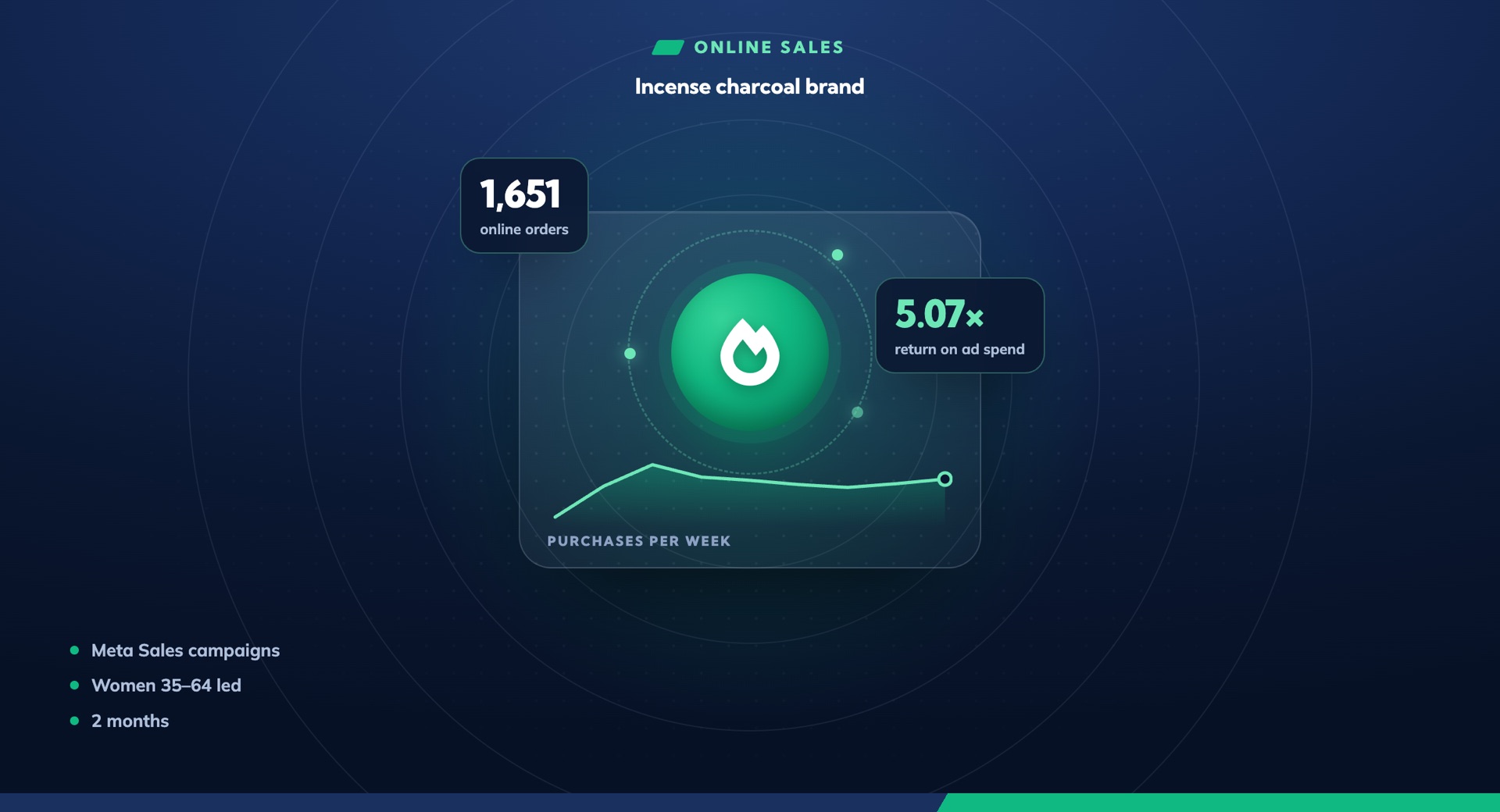
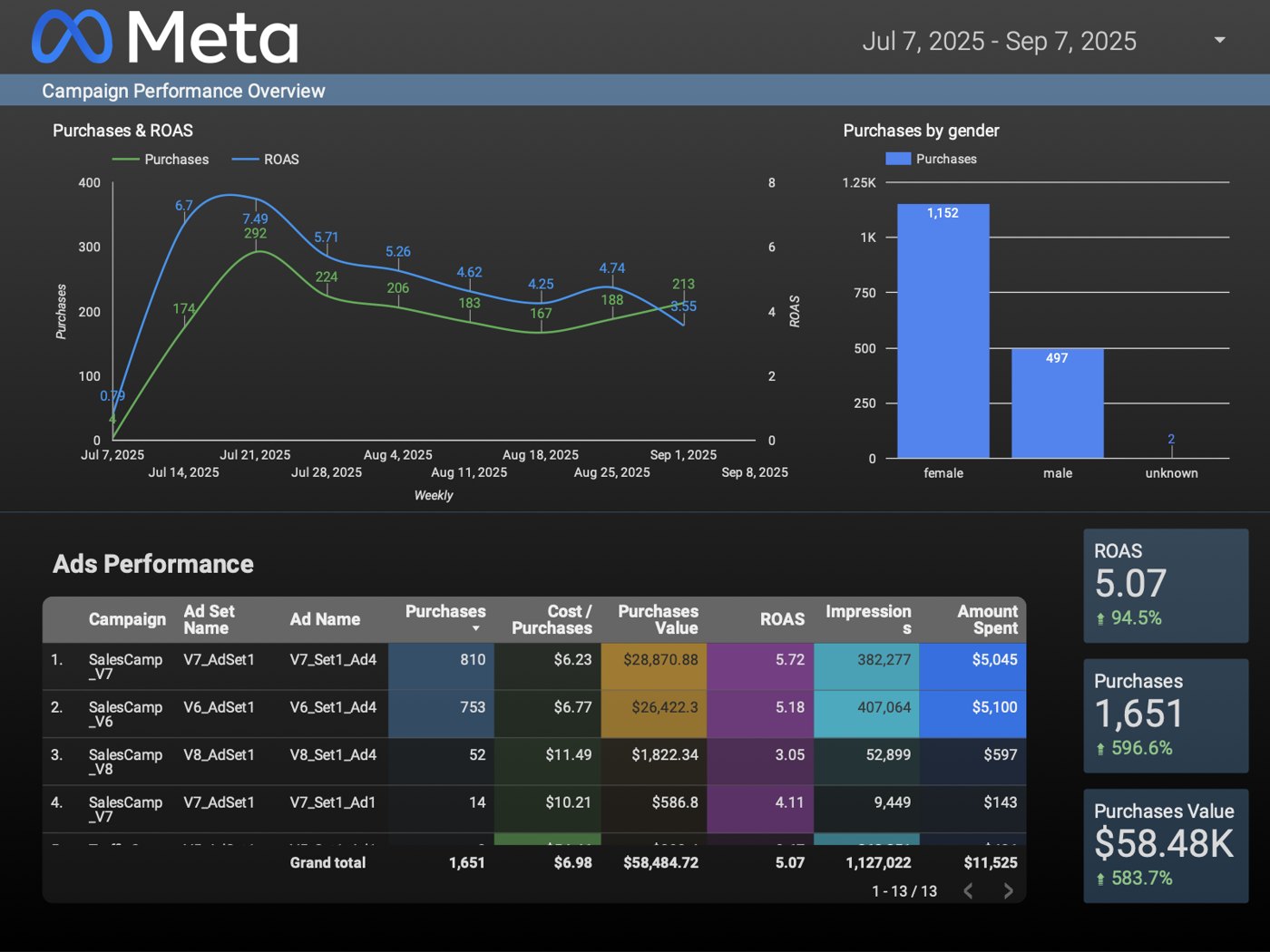
Incense charcoal is a small, repeat household purchase: a box costs about $5 to $8, and every home that burns incense keeps buying it. The brand sold four box sizes online, and in the first week of the period its sales campaigns returned 79 cents for every dollar spent. Within two months they were returning about five dollars for every one.
The situation
A product everyone needs, and ads nobody bought from
In the first week of the period the account recorded four purchases and a return of 0.79: every dollar spent brought back less than a dollar. The product was fine and the price was right. The campaigns were simply aimed at the wrong person.
What we did
Version after version, until two ads carried the store
-
Rebuilt the sales campaigns in versions
Each new version kept the winners from the last and replaced the rest: one ad set, several ads, clear names, so every result could be traced to the creative behind it.
-
Found the real buyer
The data pointed somewhere most advertisers never look: women aged 35 to 64 placed most of the orders, and women aged 55 to 64 were the cheapest of the main buyer groups, at $5.84 an order and a return of 6.08. Buyers under 25 cost nearly three times as much and placed only 17 orders.
-
Put the budget behind two winners
Two ads ended up driving about 95% of all purchases. One alone brought 810 orders at a 5.72 return.
-
Read the shopping week
Friday, Saturday and Tuesday turned out to be the strongest purchase days, the rhythm the next plan was built on.
-
Prepared the store to sell more
Product pages and copy for each box size, built around one finding: the average order was several boxes, not one.
From 4 orders a week to nearly 300
Who actually buys incense charcoal online
Proof
The report the client sees
What made the difference
Low-ticket products live or die on the right audience. Once the ads stopped chasing young, cheap clicks and started speaking to the women who actually stock the household, every order cost less and the store sold seven times more.