
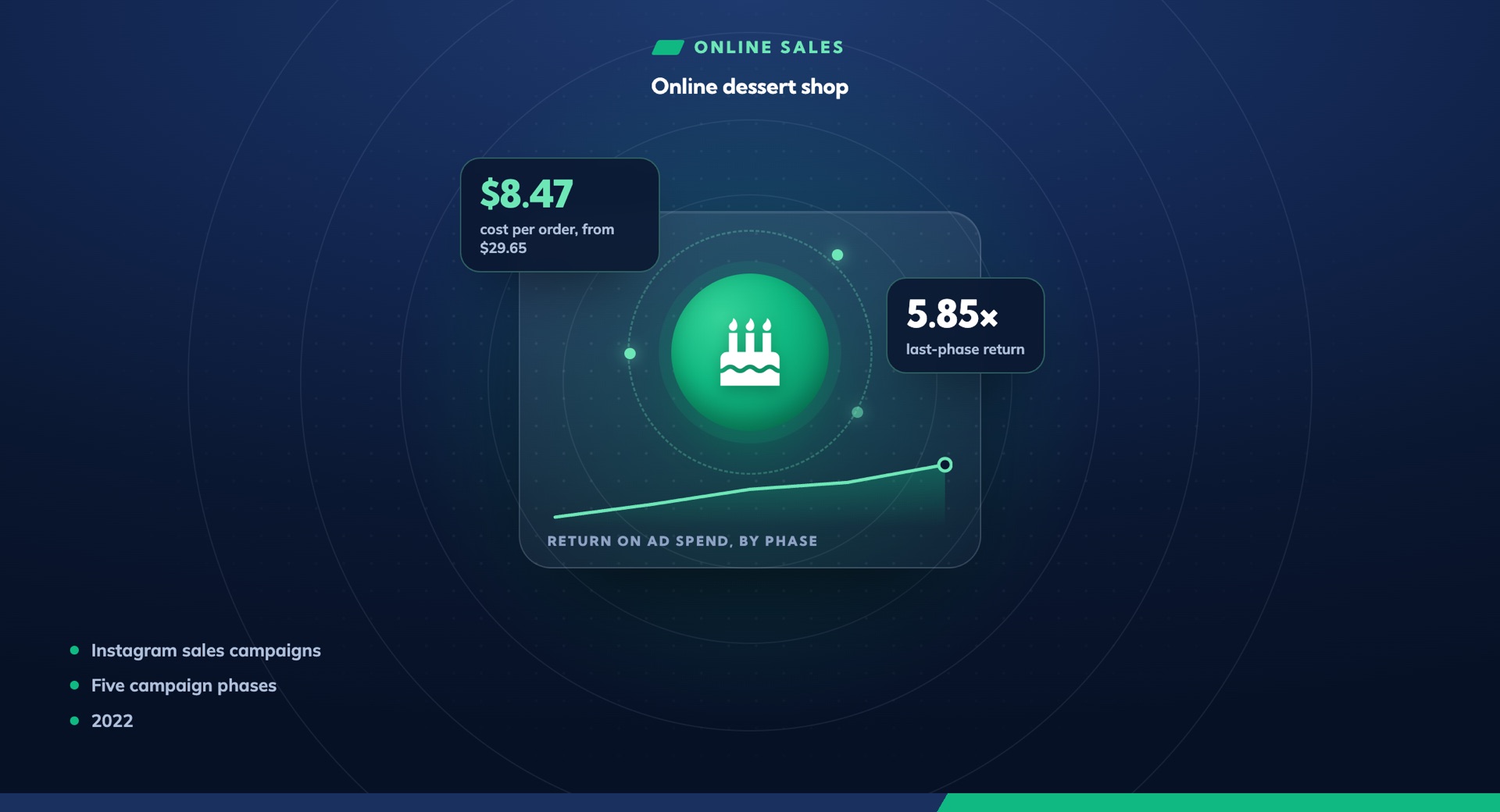
An online dessert shop sells cheesecakes and celebration cakes through its own store. When we started, its Instagram ads covered the whole range and paid about $30 for every order. We ran its sales campaigns across most of a year, one phase at a time, and each phase’s data shaped the next.
The situation
A good product range, advertised all at once
The shop had a loyal base, a list of about 38,000 past customers, and a range of cakes that all looked good on Instagram. The ads treated them all the same, and the payment page was stealing credit for purchases in analytics, so nobody knew which ads were selling.
What we did
Five campaign phases, each one sharper
-
Fixed the measurement first
The payment gateway was excluded as a referral in analytics, so purchases credited the ad or channel that actually brought the buyer.
-
Split audiences by temperature
Past customers and recent visitors, Instagram engagers, and new prospects each got their own ad set. Recent buyers were excluded everywhere, and budget moved to the strongest set after two days of data.
-
Found the hero in the busy season
One cheesecake box ad in the retargeting set hit about $6 per order and a 7× return. It got its own ad set and more budget, funded by cutting weaker sets.
-
Built around the hero in summer
Analytics showed the buyers were mostly women aged 25 to 44. The summer plan ran one product per ad set, and the hero brought 153 of the 156 orders.
-
Rescued a slow start in two days
The autumn phase opened at a 0.94 return. Warm audiences were excluded from prospecting and a funded retargeting set added. Two days later cost per order had dropped from $51 to $18.
Cost per order, phase by phase
Results
Every phase cheaper than the last
Return on ad spend, phase by phase
The slow-start rescue
What made the difference
Most shops advertise their whole menu. The data said one product was doing the selling. Building the account around it, with a permanent retargeting layer behind it, is what took cost per order from $30 to under $9.