
A fine-jewellery house with more than six decades of history makes one-of-a-kind natural-diamond pieces in three boutiques. It had never advertised its locations on Google and had no website. Its first map campaign was meant to put the boutiques on the map. It ended up telling the house something more useful.
The situation
Known in person, invisible online
For more than six decades the house had grown by word of mouth and walk-ins. When the location ads went live, the search terms that triggered them showed the real picture: people found the boutiques next to competitors’ names and under generic searches for diamonds and rings. None of those search terms used the house’s name.
What we did
Map ads, then an honest read
-
One location campaign per boutique
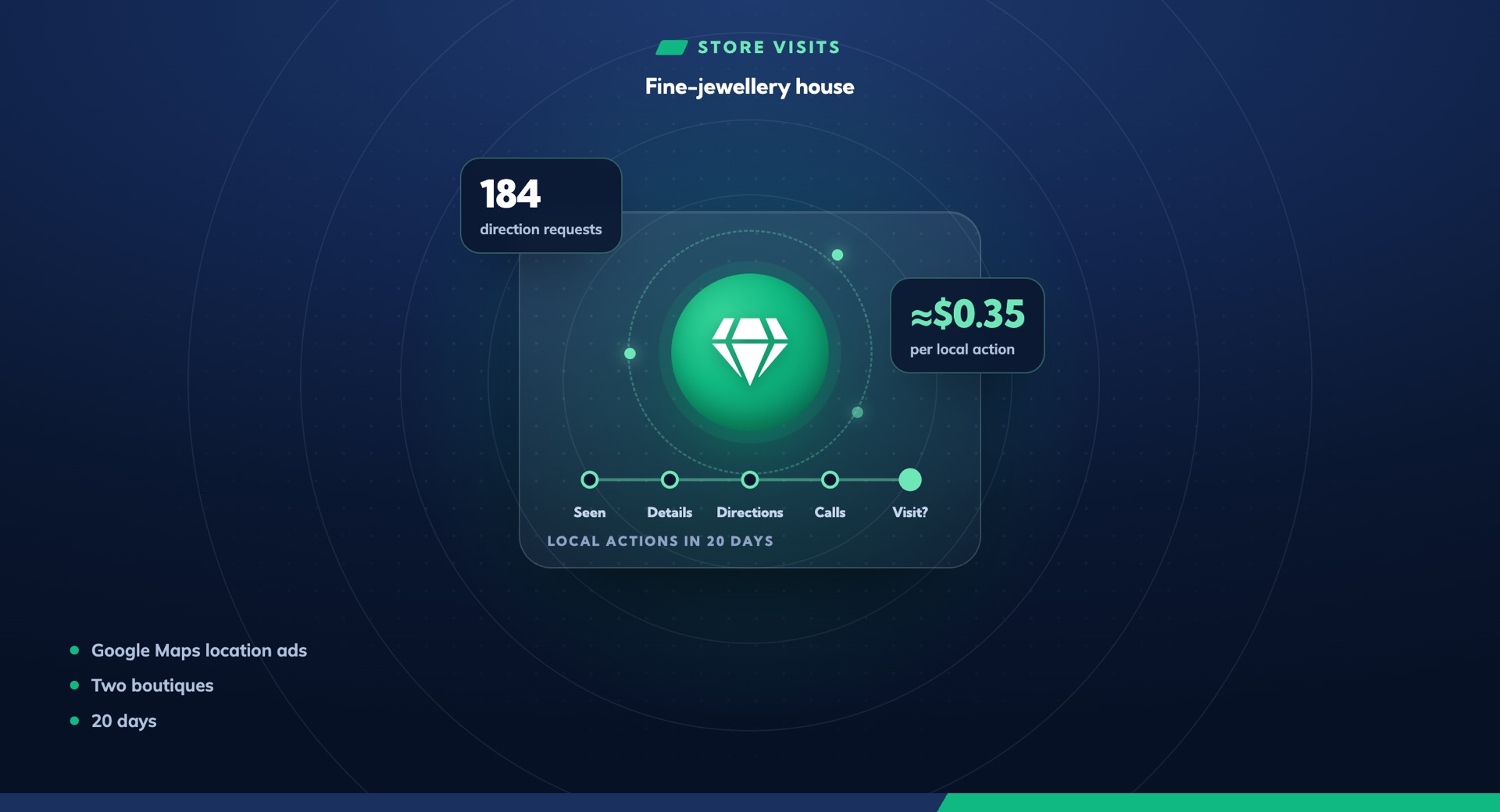
Separate Google campaigns for two boutiques, a 7 km radius around each, linked to their business profiles and measured on directions, calls and location views.
-
Bespoke, not “gold”
Ad copy built around custom work and natural diamonds: “Customize your dream jewelry”, “Bespoke jewelry, made for you”.
-
Read the search terms, not only the totals
Calls were mostly people looking for other shops, broad matching was pulling in generic gold searches, and one boutique was doing most of the work.
-
Changed the plan to match the finding
Phrase and exact match only, recent premium phones as an affluence signal, a reallocation to Instagram around the same boutiques, and a showcase website proposal so the name finally has somewhere to lead.
Results
Twenty days on the map
What people did after seeing the ads
Two boutiques, very different results
The client was clear that foot traffic did not change noticeably in those twenty days, and we said so in the report. The value of the campaign was the diagnosis: a brand that people do not search for needs a name worth searching before it needs more map ads.
What made the difference
An honest first campaign is worth more than a flattering one. The search terms showed the house had no online name yet, and that set the next step.