
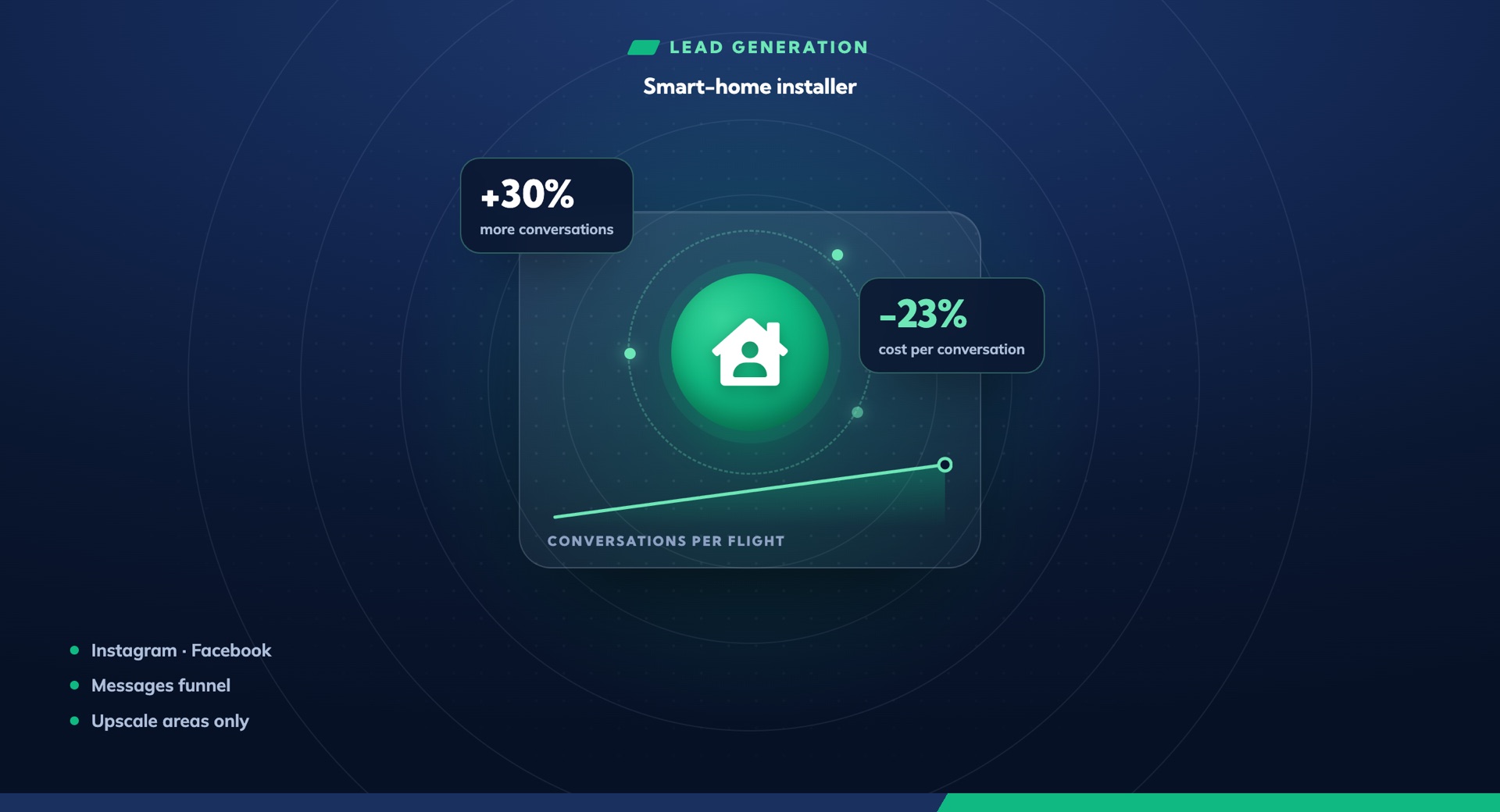
A smart-home installer sells home automation to a small, specific buyer: upscale homeowners and renovators who already like technology. Facebook could fill its inbox cheaply. The problem was who was writing in.
The situation
Cheap messages from the wrong people
In the first days of the first flight, Facebook produced the cheapest messages and the weakest leads: many from outside the audience we were targeting. Instagram cost more per message, but its enquiries were the ones the sales team wanted to call back.
What we did
Smaller audience, better conversations
-
A messages funnel built for the sales team
Messages campaigns on Instagram and Facebook, with a welcome template that asks for a name and phone number and offers a “Smart Home Query” quick reply, so every conversation arrives ready for a call.
-
Narrowed to buyers, not browsers
The Facebook audience was rebuilt to people interested in renovation or home improvement AND smart technology or early adoption, with automated broadening switched off.
-
Drew circles around the right areas
Tight radii around the city’s upscale neighbourhoods and a new premium district. Spending outside them was waste, however cheap it looked.
-
Moved the money to where quality was
Instagram had brought the better buyers in the first flight, so the second gave it three quarters of the budget, with Facebook kept small and tightly targeted.
Where the ads were allowed to run
Results
Same budget, better flight
Flight 1 vs flight 2
Second-flight budget split
The client came back for a third flight, this time on Instagram only, which is the clearest signal we had that the conversations were turning into installation work.
What made the difference
A cheaper message is not a cheaper customer. Paying a little more per conversation on the channel where the right buyers lived made every dollar work harder.