
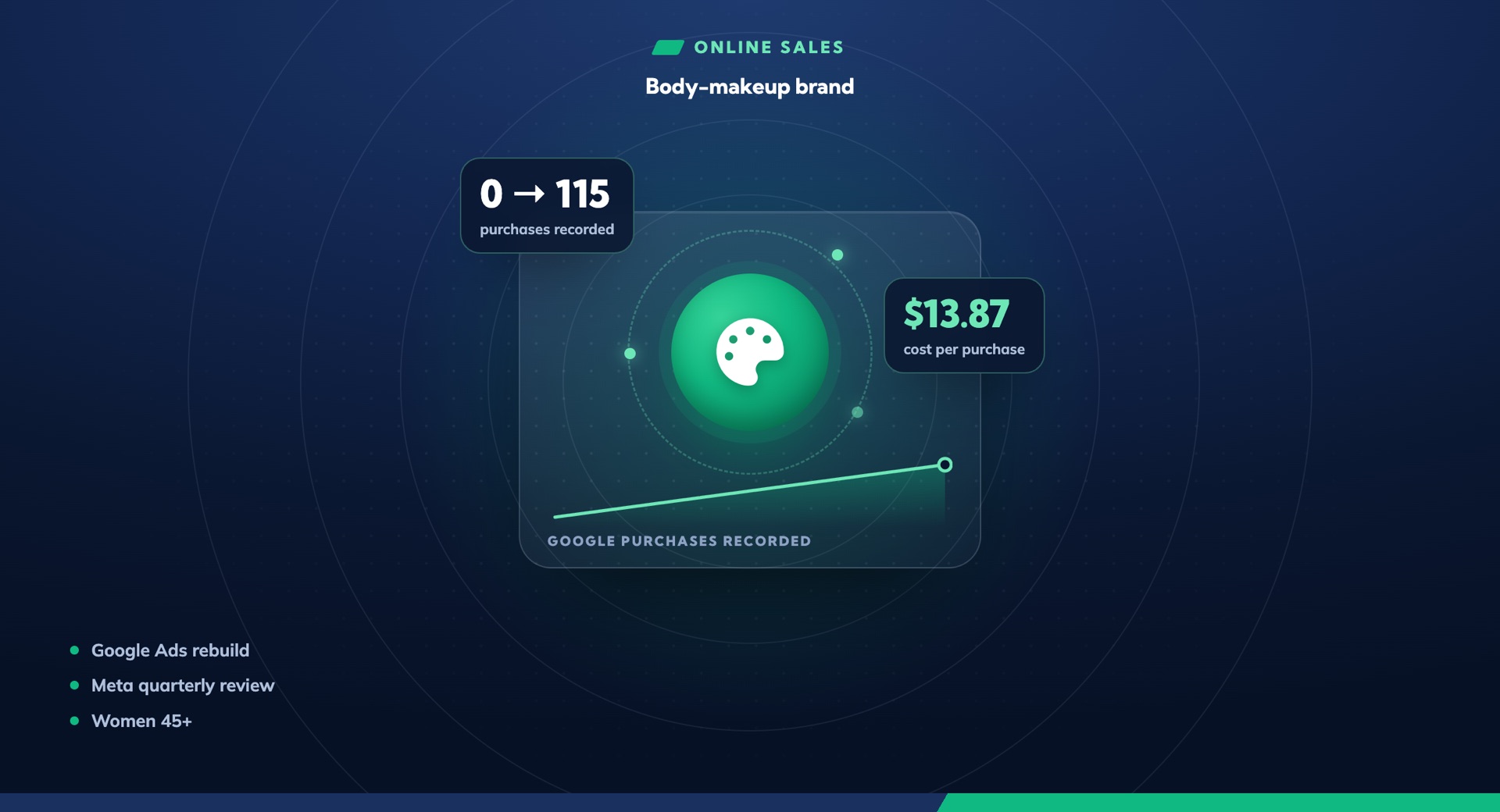
A direct-to-consumer brand makes body makeup, and most of its buyers are over 45. Meta was the engine. Google Ads was running too, and spending, and reporting nothing at all. We reviewed both accounts, fixed what was broken and turned the findings into a plan.
The situation
An account that spent and never reported
The Google audit read like a checklist of small leaks: ads pointing to product pages that no longer existed, a Shopping product group with no products in it, page views and phone calls counted as conversions alongside duplicated purchase actions, a target return set before any data existed, and the store never linked to Google Ads.
In the period before the fixes, the account spent money and recorded zero purchases. Nobody could tell whether Google worked, because it had never been allowed to show it.
What we found
- Broken product links in live ads
- Page views and calls counted as conversions
- Duplicated purchase actions
- Bidding targets set before any data
- Merchant Center errors, store not linked
What we fixed
- Every ad pointing to a live product
- Purchases as the only conversion
- Duplicates removed
- Bidding reset to match the data
- Integration fixes queued as next steps
What we did
Two accounts, two different jobs
-
Rebuilt Google around purchases
Conversions cleaned to purchases only, broken links replaced, missing headlines, descriptions and sitelinks completed, and bidding realigned across Search, Shopping and Performance Max.
-
Read the Meta quarter honestly
One automated campaign with creator content did most of the work: 1,032 purchases at a 2.03 return. Women over 45 were the buyers. The cold campaign was switched off.
-
Found the retargeting leak
Retargeting returned 0.79 because the pixel was not counting real site visitors, so the audience it retargeted was a fraction of the true one. The fix went to the developer.
-
Planned the next quarter
User-generated ads from new and existing footage, a second creator collaboration modelled on the winner, a monthly creative refresh, cost caps, and YouTube as a new test.
Google turned out to be the cheaper channel
What made the difference
Before you can scale a channel, it has to be allowed to tell the truth. Most of the Google gain came from making the account count what actually mattered.