
A professional photographer sells an online course on growing an Instagram account, to buyers in several countries. Over five months we took it from test budgets to a steady, profitable sales engine, and found that the biggest salespeople were not ads at all.
The situation
A good course and no idea where buyers came from
The course sold, but nobody knew which channel was doing it, and the pixel was counting some sales twice. Every decision about budget was a guess.
What we did
A $400 test that decided everything after
-
Tested every channel at once, cheaply
A $400 split test across Facebook, Instagram, Search and YouTube. Search and YouTube sold nothing; Instagram sold at $25 a course, Facebook at $100.
-
Fixed the measurement
The pixel was double-counting purchases, so reporting switched to unique purchases and every later return figure was read on that basis.
-
Scaled Instagram, Stories first
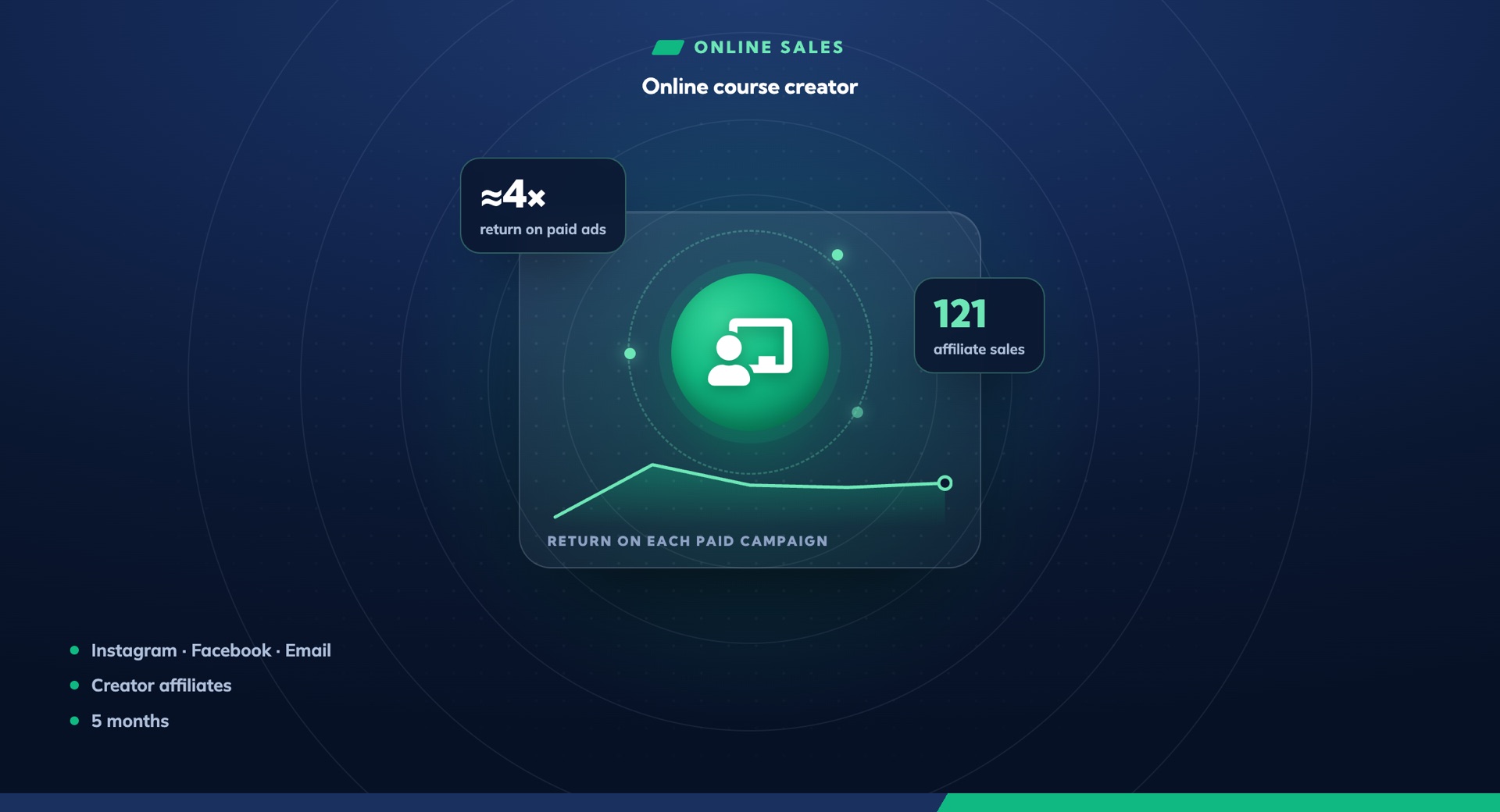
The scaled campaign returned 4.32, with seven of eleven sales coming from Stories and engaged audiences beating custom ones.
-
Launched an affiliate programme
Fifteen creators, each with a tracked checkout link and coupon. Together they drove 2,610 clicks and 121 sales at a 4.6% conversion rate.
-
Ran the seasonal moments live
Retargeting returned 4.16. On Black Friday the budget was raised to $1,000 while the return was 7.1 and pulled back when it dropped, finishing at 4.48 and 128% of the target.
The test that set the budget
Results
Profitable at every stage
Return on each paid campaign
Where the sales came from
What made the difference
The best media plan included people, not just platforms. Tracked affiliate links turned fifteen creators into a sales team that sold more courses than all the ads together.