
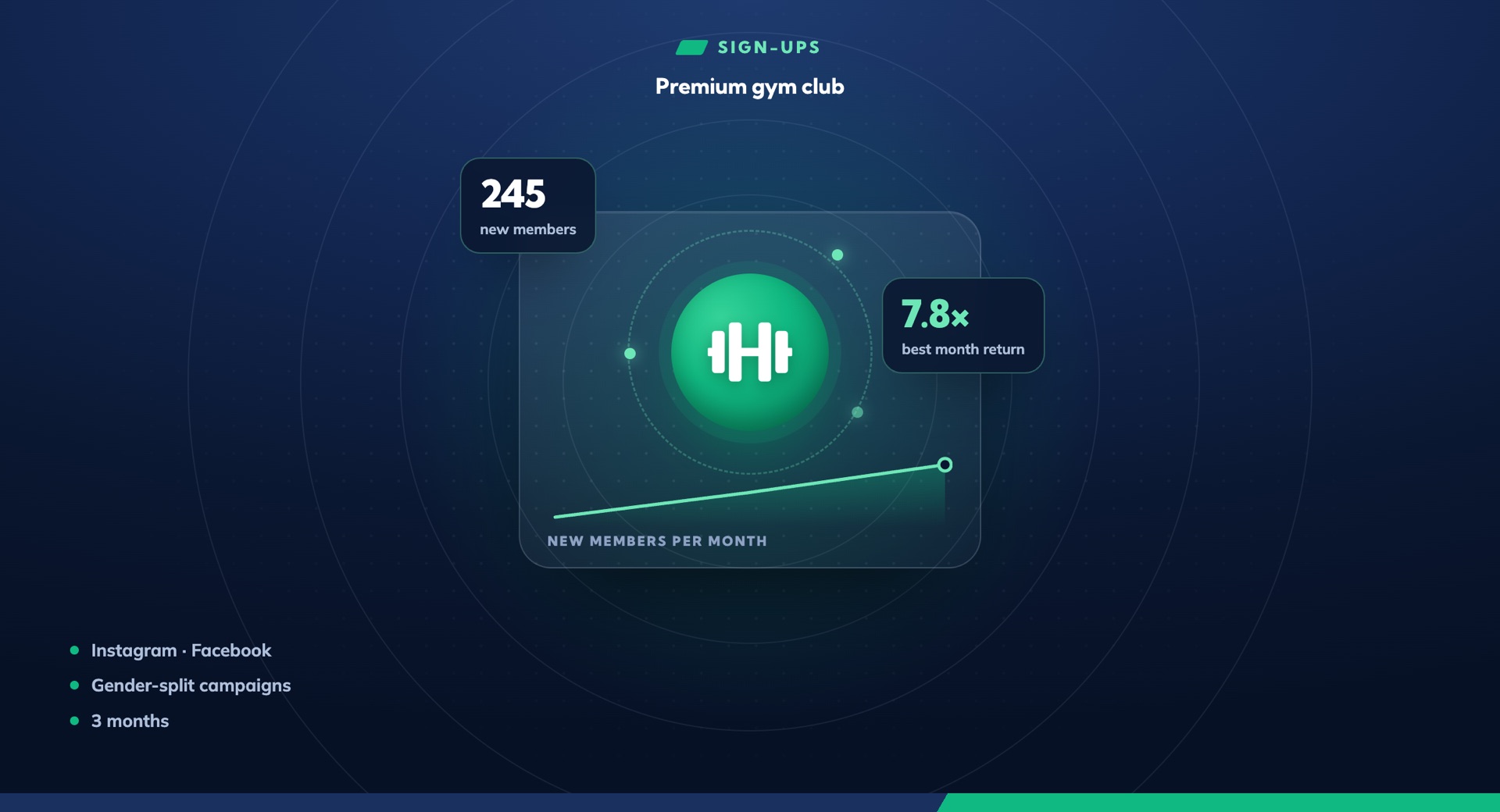
A premium gym and lifestyle club sells annual memberships at around $400, with padel courts, a pool and separate areas for men and women. It was new to the market, had no website, and needed paying members quickly. We ran its acquisition for three months and reported every month on the number that mattered: members signed.
The situation
A premium gym, and plenty of cheap conversations
The first campaigns produced conversations quickly. The gym’s sales team then told us which of them turned into members, and the answer was not the cheapest ones. Facebook chats, especially, rarely became memberships.
What we did
Let the sales team steer the budget
-
Split by gender and platform from day one
Four messages ad sets (Facebook and Instagram, men and women) within a few miles of the club, with creative built around the club life: padel, pool, equipment and hospitality.
-
Cut fast after ten days
Facebook women’s ads were costing three times the others and were paused, Facebook men followed, and Instagram was trimmed to its two best ads.
-
Tested forms against messages
Month two added instant-form leads alongside messages. Each week, the sales team’s verdict on lead quality moved the money.
-
Went all in on what closed
Month three ran on Instagram only, with men’s and women’s ad sets and a new creative collection. It became the best month of the engagement.
-
Closed every month with a sales table
Each month ended with sales, spend, return, members, average subscription value and cost per member, not just cost per message.
Results
Better members cost more per chat
Cost per message rose every month. Cost per member did the opposite in month three, when the budget sat entirely where the sales team said the real buyers were.
Membership sales per month
The cheap-chat trap
What made the difference
The cheapest conversation is rarely the best customer. Paying more per chat on the channel where members actually came from cut the cost of each new member to its lowest.