
A training academy runs about fifty short courses and fifteen diplomas, from fashion design to architecture software, for students and young graduates. When we started, it posted around eleven promotions a day with borrowed photos, had no website and an Instagram account with 111 followers.
The situation
Busy feeds, empty seats
Three competitors, the closest in the same district, fought on price, and the academy did the same: more posts, more discounts, more noise. Names, hours and the address were inconsistent across channels, and there was nowhere to send a student who was ready to book.
What we did
A system instead of more posts
-
Audit, positioning and three student types
A first-year student, a mid-degree student and a fresh graduate looking for job-ready skills, each with their own reasons to enrol.
-
One booking hub
A course website with a booking form feeding a sheet the team called from, plus a page for every course and diploma.
-
A rule for promoting every course
Promotion starts two weeks before a course, with a budget of 10% of its fee, and stops when it fills.
-
A last-minute rule for empty seats
Three days before a course with free seats, a dark ad shows the price and the start date and sends people straight to booking.
-
Conversations instead of likes
Engagement campaigns gave way to messaging campaigns, and eleven content types replaced the stream of promotions.
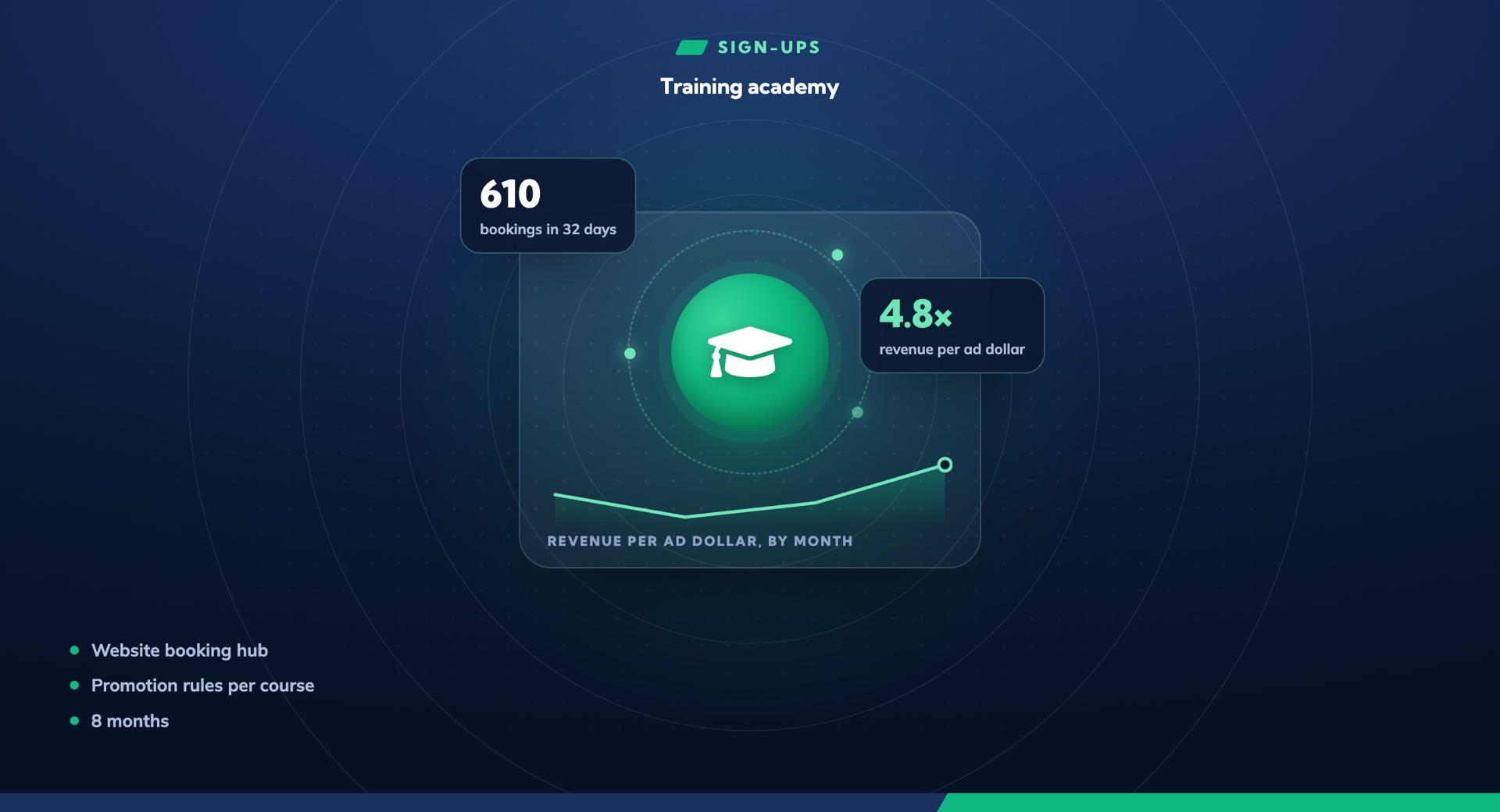
Revenue per dollar of ad spend
Results
Less money, better students
Spending less, earning more per lead
What made the difference
The academy did not need louder promotion. It needed rules: when to promote, how much to spend, what to do with empty seats, and one place every student could book.